
Back to blog
There Is No Expiry Date on Understanding — Anthony Hopkins's Story
Anthony Hopkins was 76 when he first faced the idea of Asperger's. A two-time Oscar winner's story about late recognition — and why we should see the person, not just the diagnosis.
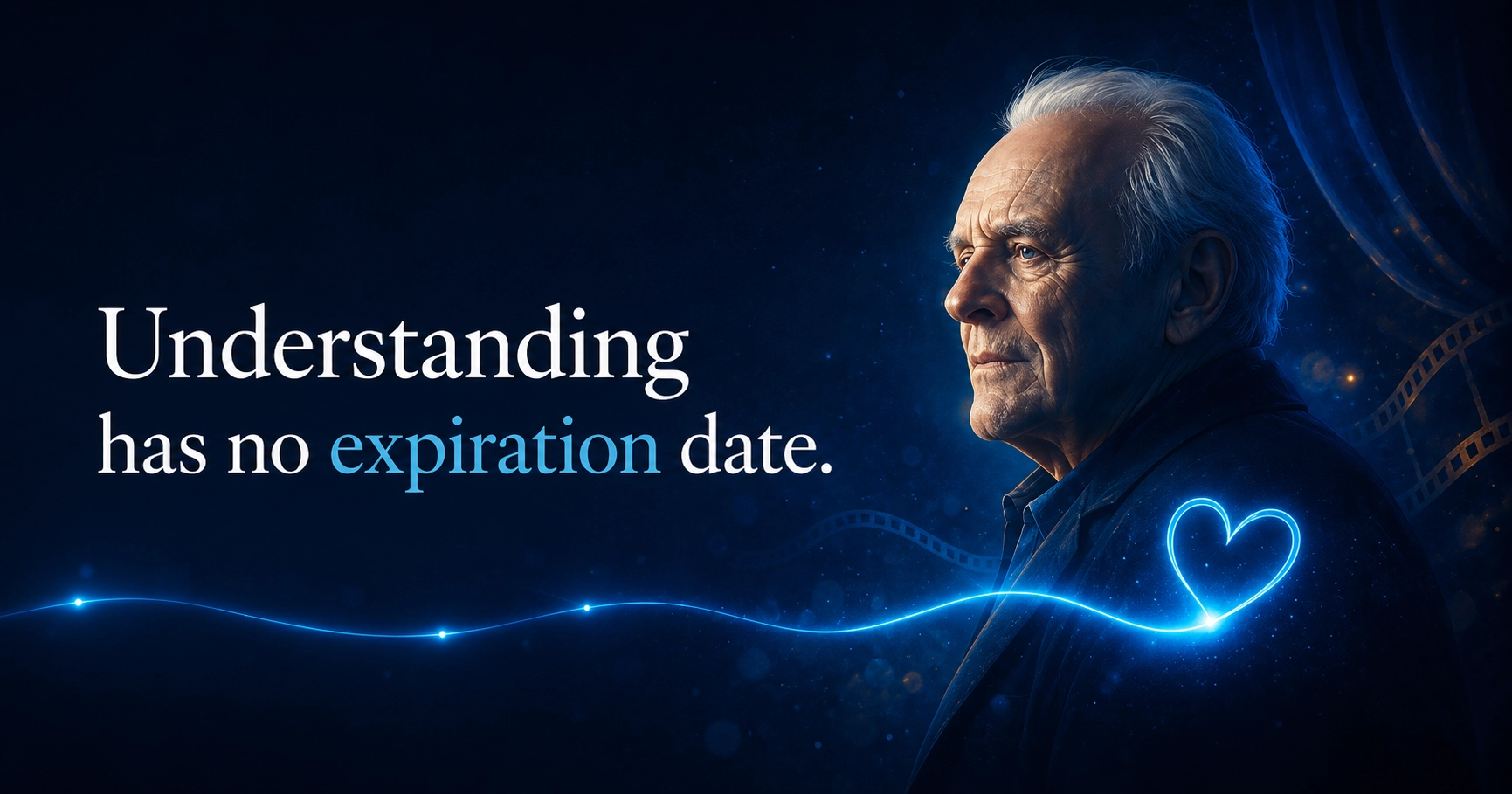
There Is No Expiry Date on Understanding — Anthony Hopkins's Story
“"We're just human beings, full of contradiction, full of mystery, full of everything that's inside us." — Anthony Hopkins, The Sunday Times, 2025”
Share:Share
There is a face almost everyone recognises. The cold stare of Hannibal Lecter, the fragile yet powerful father in The Father, the voice that has swept up Oscars. Sir Anthony Hopkins is one of the greatest living actors in film history. And late in his life, something finally got a name — something that had perhaps been with him all along: autism.
The Career Everyone Sees
The numbers speak for themselves. Two Oscars, four nominations. One Golden Globe, eight nominations. Five BAFTAs, five nominations. Two Emmys, two nominations. A career spanning sixty years, one that both the industry and audiences count among the very best.
From the outside, it looks like a perfect story. Discipline, talent, persistence.
What Stayed Behind the Success
Except the story is not that simple. For decades, Hopkins lived with traits that he himself found strange, and sometimes unsettling. Restlessness, repeated routines, that kind of intense, almost unstoppable focus that let him shut himself away for days around a single role or interest.
For a long time he simply filed these under "that's just how I am." There was no word for it, no explanation.
Speaking About It for the First Time
In 2017, in an interview, Hopkins spoke publicly for the first time about how, a few years earlier, at the age of 76, he had come face to face with the idea of Asperger's.
That alone says a lot about how little we still know today about recognising these things in adulthood — or even in old age. A whole life can go by without someone knowing the name of the way their own mind works — and this is not rare. It is a shared experience for a great many adults alive today.
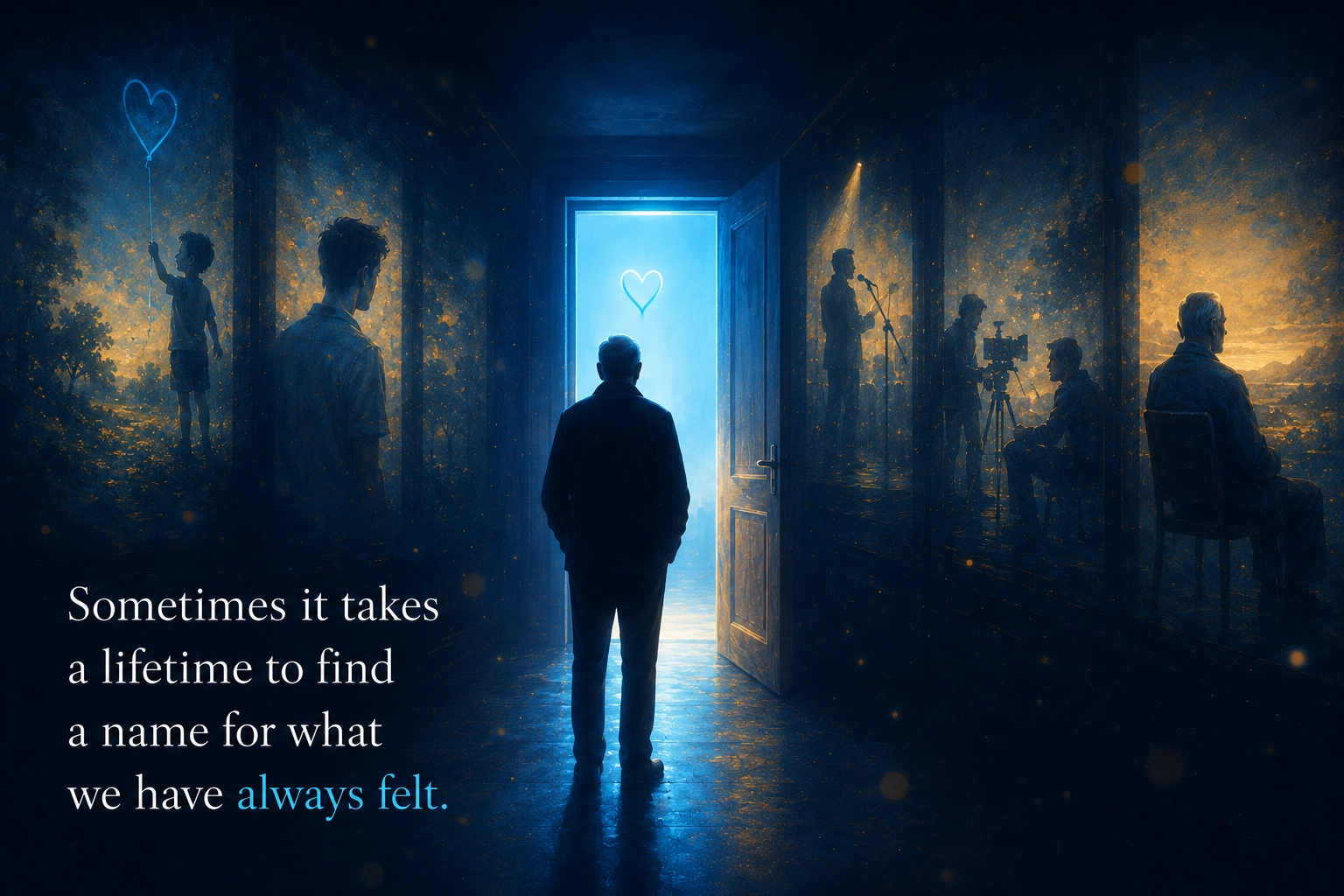
Seeing the World Differently — In Hopkins's Own Words
Hopkins described himself, in the language of the time, as "high functioning." Today many autistic people and professionals avoid that term, because it does not necessarily show a person's real support needs or their invisible struggles.
He spoke openly about his bouts of nervousness, his routines, the sometimes unstoppable, repeating trains of thought. But he did not frame any of it as a complaint. He said that Asperger's had, in its own way, been a great gift to him. That intense focus was also what helped him in his acting — letting him disappear completely into a character.
This does not make the difficulties invisible. Hopkins never claims it was easy — but he shows that being different and achieving great things do not rule each other out, and that understanding how we work can be freeing in itself, no matter what age it arrives.
But the Story Is More Complicated Than That
In November 2025, at the age of 87, in an interview with The Sunday Times, Hopkins struck a very different note. His wife, Stella Arroyave, had looked into his traits and told him, "You must be Asperger's." Hopkins's answer: "I didn't know what she was talking about. I don't even believe in it."
When it was explained to him how such a realisation might help, even later in life, he stayed sceptical. "I suppose I'm cynical, because it's all nonsense, it's all rubbish. ADHD, OCD, Asperger's, blah-blah-blah," he said. "This is life. We're just human beings, full of contradiction, full of mystery, full of everything that's inside us." He added, "These labels… who cares? But now it's fashionable."
This does not undo anything he said before. If anything, it reminds us that a person's relationship with their own diagnosis is deeply personal, complicated, and can change over time.
For some, a diagnosis brings relief and answers. Others are wary of labels. And for some, their feelings shift over the years — just as Hopkins's did.
Maybe that is exactly why it matters that we always see the person first — not just the diagnosis.
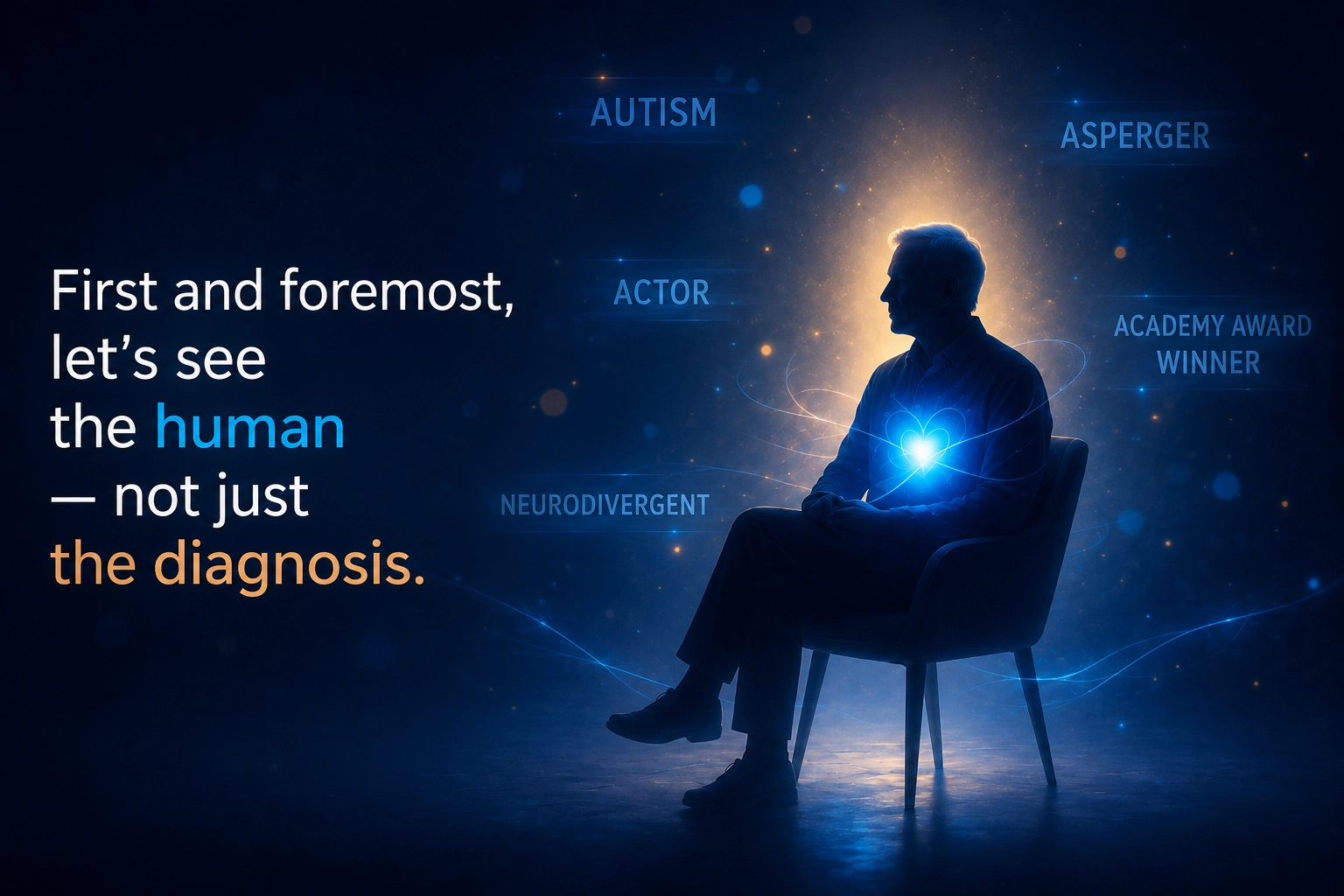
What This Tells Us
The story of a late diagnosis could easily be only about Hopkins. But really it can be about every adult who is now facing the thought for the first time: "Maybe me too?"
About the parents who recognise something in themselves when their child is diagnosed. Wentworth Miller's story is about this kind of late recognition, too: he spoke publicly about being autistic at 49. About the people who, for decades, had no words for what they were living through.
"Late" here does not necessarily mean someone missed out on something. There is no expiry date on understanding. For many people, a diagnosis is not a box to be put in, but a language — one that helps them say and understand what, until then, they could perhaps only feel.
Anthony Hopkins's story matters not because he is a two-time Oscar winner. It matters because it reminds us that the road to understanding ourselves can begin at any time.
Maybe a child's diagnosis has started raising questions in you. Maybe you have felt for decades that you work differently, you just never had the words for it. Or maybe a picture is only now coming together — one that was always there, you just never saw it as a whole.
If you would like to, share your own story with us in a comment. 💙
📚 Sources
- The Sunday Times (November 2025) — Anthony Hopkins's interview about late recognition and his relationship with diagnoses: thetimes.co.uk
- The Desert Sun (January 2017) — Hopkins speaking publicly about Asperger's for the first time, on coming face to face with the idea at 76: desertsun.com
- Anthony Hopkins and autism – an overview — background and impact of the actor's diagnosis: goldstarrehab.com
If this story spoke to you — share it or join the conversation on our Facebook page or our Facebook group, where you will find others who understand without needing the whole story explained first.
Oszd meg:Facebook