Back to blog
They Are Children Too
Autistic, ADHD, and disabled children are too often seen as problems before they are seen as children. A Children's Day reflection on acceptance and connection.
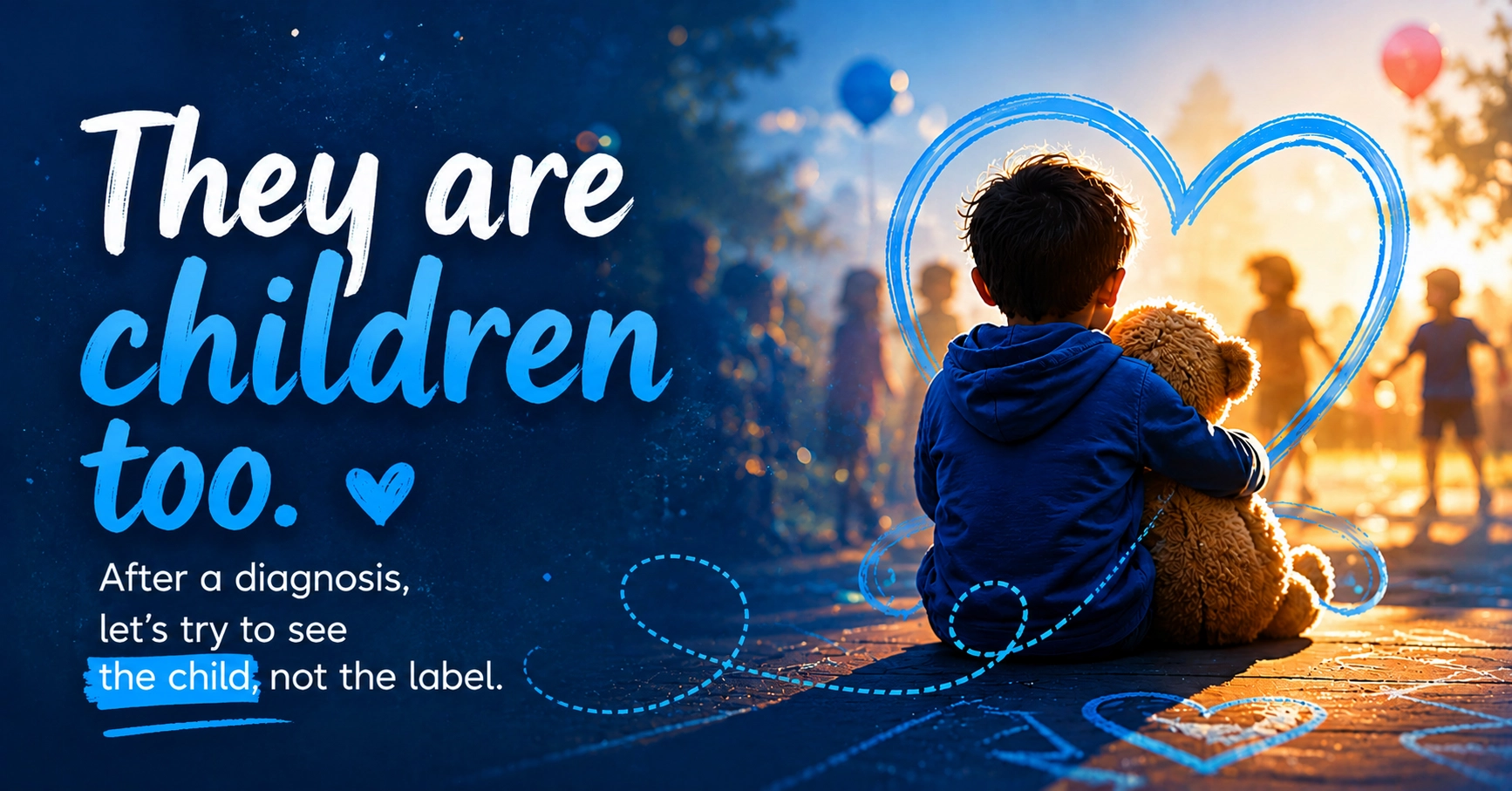
Before we see only the diagnosis, let us try to see the child.
They get excited. They feel joy. They want to connect.
They are children too.
On Children's Day, we often celebrate laughter, play, and carefree moments. Colorful programs, balloons, happy noise, smiling faces. It is easy to picture what a "happy childhood" is supposed to look like.
But there are children the world too often sees not as children, but as problems.
A loud reaction.
A sudden collapse in the middle of a shop.
A child who does not make eye contact or does not join others in the expected way.
And judgments arrive quickly.
"Difficult."
"Badly raised."
"Strange."
"Problem child."
"Bad."
But while the world sorts them into categories, something important disappears into the background:
the child.
More Than a Diagnosis
A diagnosis is only a label. The child was already the same beloved, unusual, wonderful person before anyone named it.
They still laughed at funny moments.
They still loved a favorite toy.
They still felt nervous in new places and wanted to feel safe with the people they loved.
The diagnosis did not change who they are.
It did not make them less.
It did not remove their feelings.
It only gave a name to difficulties that had already been there.
And yet autistic, ADHD, or disabled children are often treated as diagnoses before they are seen as children.
They are not an abbreviation.
They are not a case.
They are not a problem to be solved.
They are children.
What We See from the Outside, and What We Miss
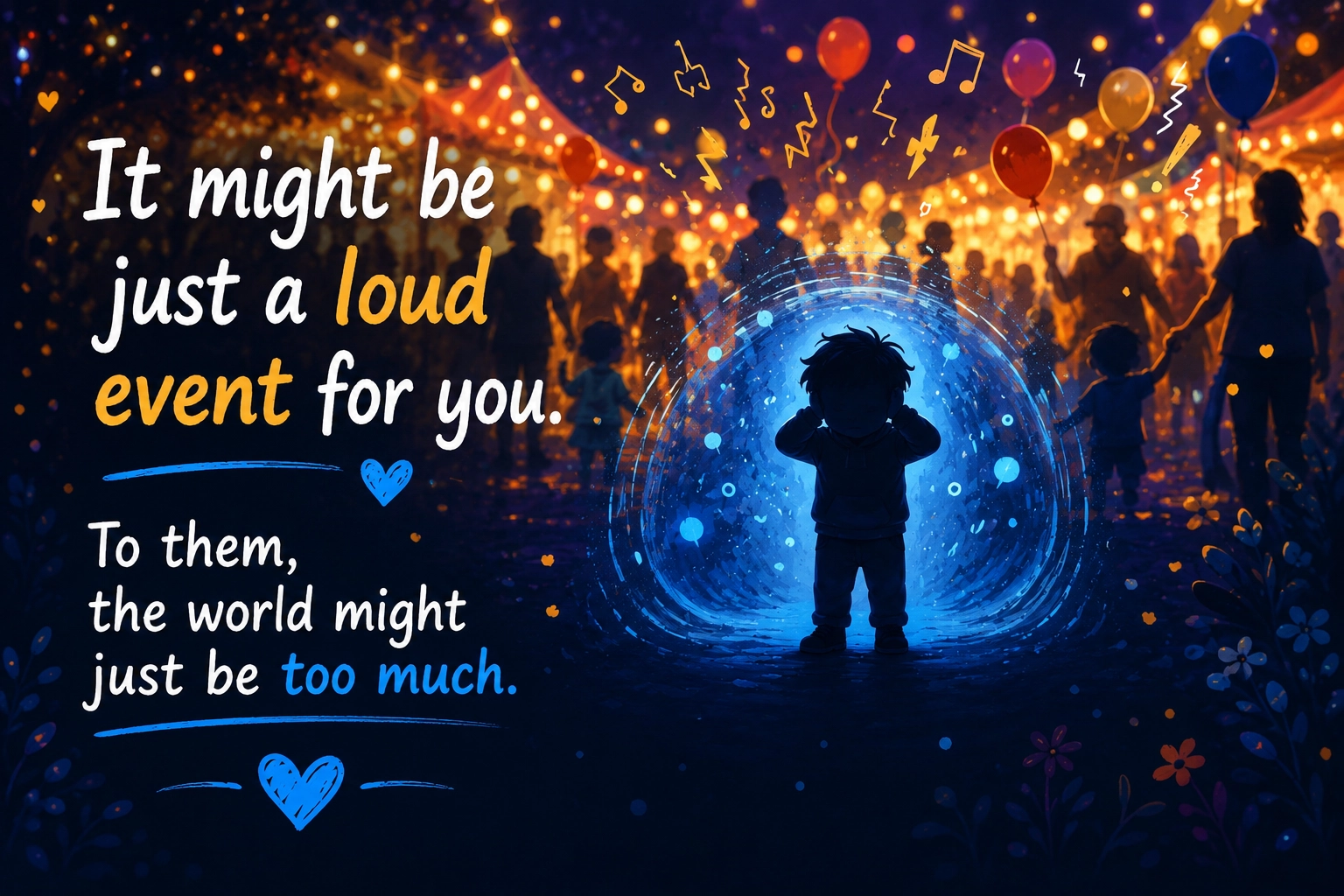
From the outside, people often see only behavior.
A child covering their ears in a loud place.
A little boy who does not join the group game.
Someone crying or shutting down in the middle of a crowded event.
From outside, it may look as if the child simply does not want to take part. Parents often know that the noise, the crowd, and the unpredictability may already be too much.
What we do not see is:
- the sensory overload,
- the anxiety,
- the uncertainty,
- the internal pressure,
- the enormous energy some children spend every day trying to adapt.
For us, it may be a few uncomfortable minutes in a shop or at an event. For them, the whole world may have suddenly become too loud.
Often it is not that they do not want to connect.
They do.
They just cannot always do it in the way the world expects.
They Want Connection Too
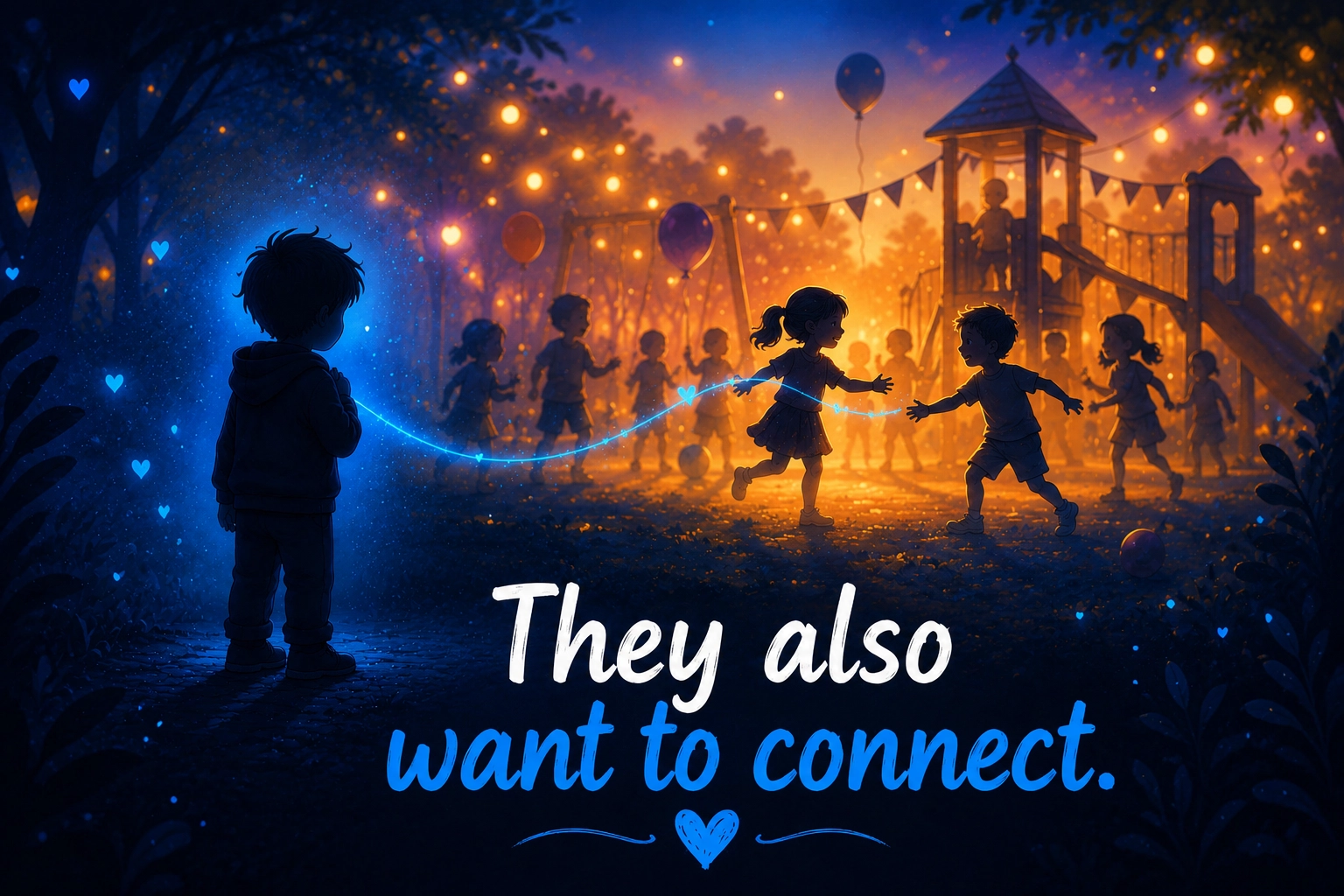
This may be one of the most important things for more people to understand.
Society often talks about autistic or ADHD children as if they do not need friendship, belonging, or community.
That is far from true.
They also:
- want friends,
- feel joy when they are accepted,
- need safety,
- want success,
- and feel exclusion deeply.
They may try to connect with different tools, in a different rhythm, or in a different way.
The reaction of the people around them can change everything.
A more patient sentence.
A teacher who understands.
A playground moment where judgment is not the first response.
Sometimes that is enough for a child to feel safe.
When the Parent Feels the Stares
Many parents know the feeling of being in public and sensing judgment instead of help.
In a shop.
At the playground.
At school.
At a family event.
Sometimes one look hurts more than words.
Because while others see a child "behaving badly", the parent knows how much internal work is happening behind that moment. They know their child may have spent the whole day trying to function in a world that is too loud, too fast, and too unpredictable.
And they know their child is not bad.
The world is simply too much sometimes.
Understanding Begins Here
Acceptance does not mean pretending the difficulties do not exist.
It does not mean everything is easy, and it does not mean families do not need real help. If your family has just received a diagnosis, we collected practical first steps in this guide.
Real acceptance begins when we try to see the person behind the behavior.
The child.
The child who:
- gets nervous,
- feels joy,
- gets tired,
- wants connection,
- and is just as lovable as anyone else.
Maybe on Children's Day, there is no more important reminder than this: every child wants to feel safe, connected, and accepted.
💙
Before we see a diagnosis, let us try to see the child.
And You?
What do you wish the world understood about your child?
Have you ever felt that people saw only the behavior and not the child behind it?
If you would like, write to us in a comment or message.
Sometimes it already helps to know we are not alone. 💙
Oszd meg:Facebook