
Blue Heart Ride
When the school run became a way to help.
children travel with us regularly
there and back every school day
a day
depending on Budapest traffic

We never planned to start anything. We were taking our little boy to school, and it turned out that other families nearby needed to get to the same place. We had a car, and there was room in it. It all started with one simple question.
If we're going anyway, why not go together?
Same school, same road
We live in Újpalota, in Budapest's 15th district. Our son's school is in Cinkota, in the 16th district.
For him, choosing a school didn't mean looking around the schools nearby and picking the one we liked. The right school for him was chosen by the local educational support service. Getting him there was up to us.
By public transport, that can mean almost an hour of travel in the morning. Waiting, changing buses, crowds and noise – all before school even starts.
Not every autistic child finds a journey like this equally hard. For some it's the noise, for others the waiting or a sudden change. A long morning journey can use up a lot of energy that they would also need at school.
And in the afternoon, they have to do the same journey again, after a whole school day.
"If we're going anyway…"
In the first days of school, we started chatting with the other parents. We soon found out that several children from our area were in the same class, and that some families didn't have a car.
We were all heading to the same place in the morning. The children all needed picking up from the same place in the afternoon.
And we had empty seats.
If we're going anyway, why not help?
So we started taking other children with us too. The help came first. The name only came later.
How it became the Blue Heart Ride
Today, four children travel with us regularly, including our own son.
We gave these shared journeys the name Kék szív járat – the Blue Heart Ride. It's not an organisation and not a service. It's just a name for everyday help between families. In the morning we take the children to school, then we go home. In the afternoon we set off again to pick them up, and then we take everyone home.
That's four trips a day. About 36 kilometres, and roughly two to three hours, depending on Budapest traffic.
That's the time and distance on our side. For the children, it means they can skip the long public transport journey with changes, both in the morning and in the afternoon.
The school day itself can still be hard or tiring. What we can make easier is the journey there and back.
A car where they can settle in
It sounds strange at first, but over time we realised that the time in the car gives the children much more than just getting from A to B.
The car is a calm, predictable place. The same faces, the same road, the same routine every day.
In the morning, they can talk about what they're looking forward to that day, or what they're a little worried about. In the afternoon, they can tell us what happened at school.
Often, things come up that are harder to say at home. The car has become a bit like a safe island for them: no need to perform, no need to fit in, just space to talk.
And there's something that surprised even us.
The children who used to not want to go to school now don't even stop in the morning. They run in so fast that they often forget to say goodbye.
We couldn't wish for better feedback than that.
An old car, on the same road every day
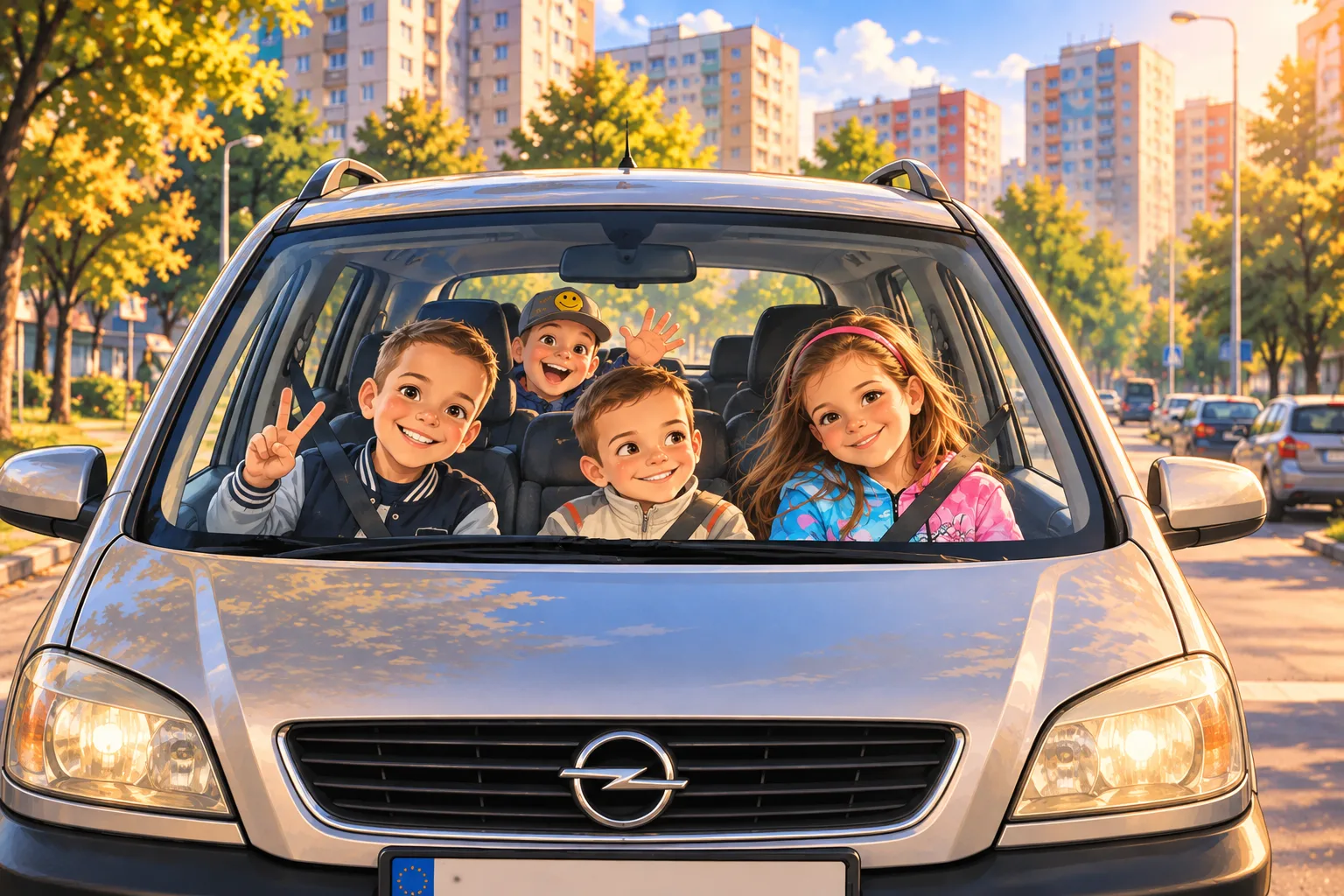
We drive a seven-seater Opel Zafira, built in 2000. We look after it, and it does its job, even though it's now more than twenty-five years old.
Along the way, these shared journeys have become a regular part of our everyday life. They help four children get to school and make daily life a bit easier for several families.
When we started, we had no idea this would become something we do every day. We only saw that we were going the same way, and that we had room.
That's still what the Blue Heart Ride is about.
If we're going anyway, come with us.
Want to know who we are and how Kékszívvel started?
About us